- ×
- シュガーダディ(SugarDaddy)の運営会社は信頼できる?
- シュガーダディ(SugarDaddy)を利用したパパ活のお手当の相場
- シュガーダディ(SugarDaddy)を利用したパパ活がおすすめできる女性のタイプ
- シュガーダディ(SugarDaddy)を利用したパパ活がおすすめできない女性のタイプ
- シュガーダディ(SugarDaddy)に関する口コミ評判を紹介
- シュガーダディ(SugarDaddy)の料金プランと比較
- シュガーダディ(SugarDaddy)でパパ活相手を探す方法、やり方、使い方
- シュガーダディ(SugarDaddy)を利用してパパ活する男性の特徴
- シュガーダディ(SugarDaddy)の特徴とは??
- シュガーダディ(SugarDaddy)を利用してパパ活するメリット
- シュガーダディ(SugarDaddy)を利用してパパ活するデメリット
- シュガーダディ(SugarDaddy)は男女どちらにでもおすすめできるツール
公式URL
https://sugardaddy.jp/
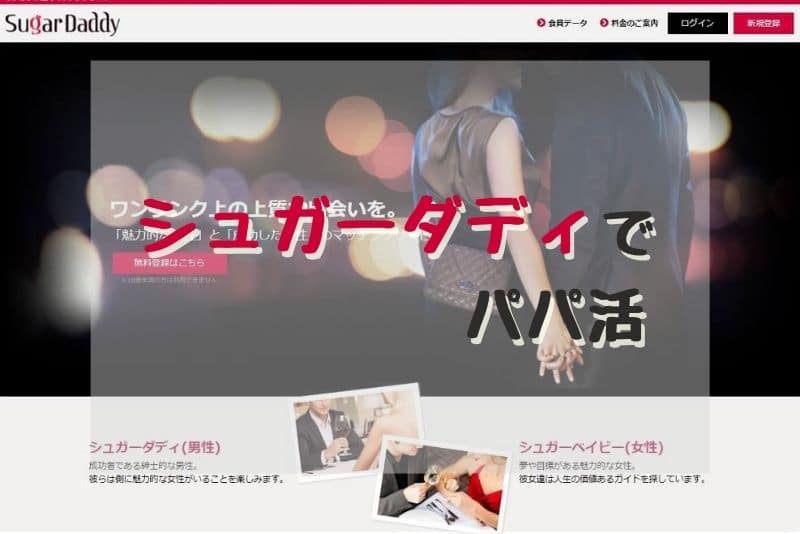
シュガーダディは、経済的に余裕のある男性と女性をマッチングしてくれるアプリです。
パパ活アプリとも言われ、パパ活をしている男女が利用していることでも有名です。
ここでは、シュガーダディでパパ活したいと考える男女のために、料金や流れ、お手当などを解説していきます。
利用している人の特徴、メリットやデメリットなどもまとめていくので、素敵なパパ活を楽しみたいという人は最後まで目を通すようにしてくださいね。
シュガーダディ(SugarDaddy)の運営会社は信頼できる?

| 運営会社 | シナプスコンサルティング株式会社 |
|---|---|
| サイトURL | https://sugardaddy.jp/ |
| 所在地 | 札幌市中央区大通西17丁目1-14 |
| 電話番号 | 011-676-8388 |
| なし | |
| インターネット異性紹介 事業届出 |
30150024001 |
シュガーダディはワンランク上で上質な出会いを提供するという触れ込みのマッチングサービスです。
男性を「シュガーダディ」、女性を「シュガーベイビー」と呼称し、互いにメリットのあるマッチングを成立させることを目的としています。
シュガーダディは2012年に設立したパパ活に使える老舗アプリです。
18歳未満は利用できませんし、利用するときは公的な証明書が必要。
HPの作りもしっかりしていて情報量も多いですし、会社概要もちゃんと記載されていますよ。
マッチングアプリやパパ活アプリは情報が少ないこともありますが、シュガーダディは他社と比べても情報量が多め。
公安委員会に届け出をしていますし、セキュリティもしっかりしているなど、違法性がなくて安全な業者だと言えますね。
ピシマ、ワクメ、ハピメ デビュー👏🏻👏🏻
5年間シュガダ、ペイタ、パディ、交際クラブだったから新鮮👍🏻結構好条件いる☺️
5歳サバ読んでるけどいけるかな?ww— 復活pjゆちゃん🧸男からのリプお断り (@yuchan_pppj) April 19, 2022

シュガーダディ(SugarDaddy)を利用したパパ活のお手当の相場

公式URL
https://sugardaddy.jp/
| 東京、大都市圏 | 地方 | |
|---|---|---|
| 顔合わせ | 5,000~10,000円 | 4,000~8,000円 |
| 食事のみ | 10,000~25,000円 | 8,000~20,000円 |
| 1日デート | 20,000~30,000円 | 10,000~25,000円 |
| 大人の関係 | 20,000~50,000円 | 20,000~50,000円 |
| 固定パパ | 50,000~150,000円 | 50,000~100,000円 |
地方と比べて東京の相場は高いですが、地方の大都市であっても東京と変わらないお手当を出すケースもあります。
また、上記を見ても分かる通り、手当の金額の幅が広いですよね。
シュガーダディに登録しているパパはお金持ちが多いのでお手当が高めになっていますが、パパや女の子によっても金額が変わってきます。
お金払いがいいパパかどうか、好みの女の子かどうかなどでも金額が変わることが多いです。
金額を交渉できることあるので、そのときは相場内で提案するようにしましょう。


シュガーダディ(SugarDaddy)を利用したパパ活がおすすめできる女性のタイプ
たくさんの男性の中からパパを探したい女性
シュガーダディは会員数50万人と、同種のサービスの中でも会員数の多さを誇っています。
マッチングサービスは供給側も飽和状態にあり、現在でも多くの新サービスが次々とリリースされていますが、その中には思うように登録者数が伸びず、パパ活をしたいと思って登録してもほとんどマッチングされることがないといった状況もあります。
選択肢の多いので、選ぶ大変さにも繋がりますが、とにかくたくさんの男性を見て選びたいという女性には向いていると言えるでしょう。
気になった相手と気軽にやり取りをしたい女性
一般的にマッチングサイトやアプリなどの多くは、互いに「いいね」をし合った相手など、ある程度のマッチングの段階まで進んでいる状態でなければメールのやり取りはできません。
しかしシュガーダディではマッチングが成立していない状態でもメールを送り合うことができます。
このことにより、「いいね」を気軽に押すことに抵抗のある女性や、メールで自分の良さをアピールしたいという女性にとっても使いやすいでしょう。
気になった相手にすぐにメールをしたいという使い方に向いています。
デートのセッティングが面倒な女性
シュガーダディの特徴の一つとして、スケジュール機能というものがあります。
これは用意されたカレンダー上であらかじめ都合のいい日を決めておくと、同じ日にチェックを入れていた相手との双方にお知らせが届くという仕組みです。
もちろん、スケジュールが合っているというだけでデートが確定するわけではありませんが、予定を立てる過程で相手のスケジュールなどを聞き合って日取りを詰めていく作業を省略することができます。
また日付が合うことからデートに発展するなんて出会いも期待できるかもしれません。
シュガーダディ(SugarDaddy)を利用したパパ活がおすすめできない女性のタイプ
高収入男性のみを狙いたい女性
シュガーダディの特徴として、利用料金が低めに設定されているということがあります。
男性利用者からすれば低い料金の方が使い勝手が良いとも言えますが、高級志向のマッチングサイトなどでは会費の高さが一定の足切りとして機能している面もあり、高収入の男性しか使えないといった女性にとってのメリットがあります。
逆に利用料金が低いということは収入のあまり高くない男性でも使いやすく、集まりやすいということであり、高収入の男性のみを狙い撃ちしたい女性にとっては目的でない男性の割合が多くなってしまうと言えるかもしれません。
男性の信頼性をある程度担保しておきたい女性
シュガーダディも他のサイトやアプリと同様に登録の際には本人確認が義務付けられています。
ただしその方法は免許証などの書類を写真に撮ってアップロードするというもので、場合によっては偽ることも不可能ではないと言えます。
実際に口コミなどでは、「会ってみた男性の年齢や顔が全くの別人だった」という声もあり、本人確認についてはやや不安があります。
他の面接が実施されているサイトや、本人確認を徹底的にするタイプのサービスに比べれば、信頼性はやや低めである可能性があります。
相手の顔をしっかり確認したい女性
前述の話とも繋がりますが、シュガーダディではプロフィールで顔写真の公開が必須とはなっていません。
そのため、顔写真を公開していない利用者は全体でもかなりの割合になります。
そうした匿名性の高さは身バレなどの危険性も考えればメリットともなりますが、会うまで相手の顔がわからないというのも少し怖いところがありますよね。
顔写真を公開していなくても会う段階になってメールなどで写真を見せてもらうことは可能ですが、相手の顔をしっかりと確認してから選んでいきたいという女性にはあまり向いていません。
シュガーダディ(SugarDaddy)に関する口コミ評判を紹介

公式URL
https://sugardaddy.jp/
悪い口コミ評判


良い口コミ評判


シュガーダディの口コミを見る限り、男女共に「会える」ことは可能性が高いようです。
しかし、そこから先に関しては、特に男性の利用者は経済力や容姿で選別されてしまうことも多く、不満を持つケースが目立ちます。
シュガーダディ(SugarDaddy)の料金プランと比較

| プラン | 料金 | 利用制限 |
|---|---|---|
| 無料登録 | 0円 | メッセージの送信回数には制限あり |
| 1ヶ月プラン | 8,000円/月(税込) | 全ての機能が利用可能 |
| 3ヶ月プラン | 7,500円/月(税込) | 全ての機能が利用可能 |
| 6ヶ月プラン | 7,000円/月(税込) | 全ての機能が利用可能 |
| 12ヶ月プラン | 6,000円/月(税込) | 全ての機能が利用可能 |
シュガーダディの料金は女性は無料となっています。
男性は月ごとのプランに入る必要があり、1ヵ月プラン、3ヵ月プラン、6ヵ月プランがあります。
金額と有効期限が違いますが、利用できる内容は全く同じです。
利用したい月日と料金で比較するようにしましょう。
プランに加入すると、プロフィールを見る、メッセージ送信や受信、マッチング機能、掲示板なども使うことができます。
定額制なので、メッセージを送るときに料金がかかるといったこともありません。
登録は無料ですし、月額料金さえ支払っていけば別途料金が発生することもないので安心して使うことができます。
シュガーダディ(SugarDaddy)でパパ活相手を探す方法、やり方、使い方

①まずは会員登録をする
HPを開いてまずは無料登録をしていきましょう。
メールアドレスを入力してメールを送信すると、返信が届きます。
届いたURLにアクセスして本登録をしていきます。
②年齢を確認する
利用するためには本人確認や年齢認証が必要です。
年齢確認をするように表示がでてくるので、免許証などの写真を撮って貼り付けるようにしましょう。
③プロフィールや自己紹介を書く
自分がどんな人なのか分かるように、できるだけプロフィール欄を埋めていきましょう。
自己紹介文は自由に書くことができるので、上手くアピールしていくようにしてください。
プロフィールの写真も貼って、まずは準備を行います。
④パパを探す
検索機能や掲示板を使ってパパを探していきます。
男性からのアプローチを待っているだけでも問題ないですが、自分から動くことも考えてみましょう。
プロフィールなどを確認し、気になるパパを見つけたらメッセージを送りましょう。
足跡を残すなどすればパパからメッセージが届くこともあります。
⑤実際に会う
メッセージでやり取りなどしたら実際にパパと会いましょう。
待ち合わせ場所を決めてデートをし、お互いに納得できたらパパ活が始まります。
また、シュガーダディには都合の良い日を入力しておけば女性とマッチングしてくれる「マッチングシステム」もあります。
マッチング機能は3ヵ月先までの予定を入れることができる機能です。
デートをしたい予定日がマッチした女性と結びつけてくれるので、自分で探す時間がない人にもおすすめです。
シュガーダディ(SugarDaddy)を利用してパパ活する男性の特徴
年収の確かな男性と出会える
シュガーダディには会員ランクがあり、1番上のランクのダイヤモンド会員になるためには無料会員とプレミアム会員にはない年収証明が必要となります。
当然、女性会員の人気はダイヤモンド会員に集中するため、シュガーダディでは年収を証明できる男性が有利となっています。
パパ活アプリではお金持ちのフリをして女性に近づく詐欺パパもいますが、シュガーダディには年収を偽らないで信頼できるパパが多いのが特徴です。
スムーズにデートの約束をしたい男性
シュガーダディにはスケジュールの合う会員とマッチングできるシステムがあります。
そのため、ダラダラとメッセージのやりとりをって続けるよりも、すぐにデートをしたいと考える、パパ活向きの男性が見つかりやすいです。
本当に会って、パパ活デートをする気がある男性が利用しているので、顔合わせまでが非常にスムーズに進み、すぐにお手当をゲットすることができます。
安全にパパ活をしたい良識のある男性
若い女性とパパ活デートをしたい男性の中には、未成年者と遊びたい男性もいます。
しかし、シュガーダディでは会員登録時に年齢確認が必須となるので未成年者が利用することはできません。
そのため、若い女性が好みでも未成年者に手を出すような危険な男性が利用することもありません。
安心安全に、良識を持ってお付き合いしてくれる紳士的なパパが多いのが特徴です。
シュガーダディ(SugarDaddy)の特徴とは??
- 男性のステータスが分かりやすい
- スケジュール機能でデートも気軽にセッティング
- マッチングなしで気になった人とすぐにやり取りできる
- 年齢確認あり!安心してパパ活できる
- 24時間365日、サービスが厳重に監視されていて安全
男性のステータスが分かりやすい
シュガーダディでは、男性のステータスで会員ランクが定められており、それによって相手を判断しやすくなっています。
それが「無料会員」、「プレミアム会員」、「ダイヤモンド会員」であり、よりリッチなパパを選びたい、というのであればダイヤモンド会員の方を選ぶことが最適です。
スケジュール機能でデートも気軽にセッティング
スケジュール機能があります。
シュガーダディにはカレンダー機能というのがあって、それに自分のスケジュールを入れておいて、自分が空いてる日や住んでいるエリアなどからマッチングできる相手を一覧で見ることができるようになっています。
細かい相手との予定などを見て、合わせて、探すなどが不要です。
少しでも早く、そして効率的にパパ活をしたいという女性にとって強い味方となってくれることでしょう。
ちなみに3ヶ月先の予定まで入力可能になっていますから、大分先まで予定を組めるようになっています。
マッチングなしで気になった人とすぐにやり取りできる
必ずしもマッチング機能などをフル活用しなければ出会えないというわけでもないです。
他の似たようなサービスですとマッチング機能から限定であったり、「いいね」とかの挨拶的なやり取りをしてから、ということが多いのですが、シュガーダディでは即座にメッセージのやり取りが可能となっています。
無駄なく、メッセージのやり取りをするとができるようになっていますから、スムーズに理想のパパ活相手を見つけることができるようになっているわけです。
年齢確認あり!安心してパパ活できる
シュガーダディの機能を使うとき、特にメッセージ機能を使う際には必ず年齢確認が必要になっています。
つまりは、年齢的に問題ないことが確認されている、ということの担保にもなります。
男性側としてもこれは助かることでもありますし、女性側としても相手がその手の疑いなく、メッセージを送ってきたりとか、やり取りをしてくれるようになる、ということになりますから、実に魅力的なシステムになっているわけです。
24時間365日、サービスが厳重に監視されていて安全
監視のシステムもバッチリです。
24時間365日、サービスのあらゆるところが監視されており、それこそ不適切なメッセージとか勧誘は通報もできますし、監視されているが故にその手の怪しい人は素早く除去するようになっています。
シュガーダディ(SugarDaddy)を利用してパパ活するメリット

太パパの判断がしやすい
シュガーダディは男性会員は3つのランクがあり、それが一目で分かるようになっています。
最上級のダイヤモンド会員であれば、料金を多く払ってシュガーダディを利用しているということなので、その経済力で熱量が分かり、太パパになれるかどうかが分かります。
しかし、その分、ダイヤモンド会員のパパに女性が集まってしまい、マッチングしにくいという点もあります。
すぐに出会えてデートができる
シュガーダディは気軽にパパと出会うことができるアプリです。
マッチングしなくてもすぐにメッセージを送ることができますし、すぐに会えるスケジュール機能があるので便利。
スケジュール機能とは、デートをしたい日を登録できるシステムのことです。
スケジュールが合う男女をマッチングしてくれるので、面倒なやり取りなくデートの約束をすることができますよ。
自分からパパを探すこともできますが、すぐにパパと知り合いたい女性はスケジュール機能も使ってみるようにしましょう。
通知が来ればどんなパパなのか確認し、実際に会うかどうか考えてみましょう。
24時間365日監視しているから安心感がある
シュガーダディは利用者が安全に利用できるように配慮しているアプリです。
24時間365日いつでも監視を行っているので、トラブルに巻き込まれにくくなっていますよ。
また、ブロック機能もあるので安心。
断ってもしつこいパパ、不快なメッセージを送ってくるパパなどに遭遇した場合は、ブロックするようにしましょう。
ブロックすればメッセージが届くことはないので、トラブルに巻き込まれそうになったときも安心です。
パパが今まで何回通報されたのかも見ることができるので、事前に危険そうな相手は避けることもできます。
シュガーダディ(SugarDaddy)を利用してパパ活するデメリット

女性が多いので競争率が高い
シュガーダディは男性の利用者よりも女性利用者の方が多いです。
そうなると競争率が高くなるので、なかなか良いパパに出会えないこともあります。
特に、ダイヤモンド会員のパパは人気。
男性がダイヤモンド会員になるためには本人確認の他、年収証明をする必要があります。
ダイヤモンド会員になれば「お金を持っている、経済力がある」ことが証明されます。
そのため、女性はダイヤモンド会員の男性に集中してしまいます。
パパ受けが良くなるように自己紹介文やプロフィールなどをしっかり作り込んだり、メッセージ内容をしっかり考えるなどの努力も必要です。
印象が良くなるような写真を使うなどして、少しでもパパの目に留まるようにしておきましょう。
パパ活詐欺も存在している
シュガーダディはお金持ちのパパが多くいますが、全員がパパ活目的というわけではありません。
中には詐欺をするために登録している男性もいるので注意しておきましょう。
例えば、食い逃げ詐欺、やり逃げ、何かの勧誘など。
初めて会うときは少なからず警戒しておき、完全に2人きりになる密室は避けておきましょう。
詐欺などを行っているのはごく一部ですが、絶対に被害にあわないわけではないので警戒しておくことが大事です。
シュガーダディ(SugarDaddy)は男女どちらにでもおすすめできるツール

ここまで、シュガーダディ(SugarDaddy)を利用したパパ活の相場が知りたい!もらえるお手当はどのくらい?を紹介してきました。
シュガーダディは使いやすさや料金、女性の質を考えてもおすすめ。
ダイヤモンド会員や通報機能など気をつけておくべきこともありますが、マッチング機能やカレンダーが便利なので使いやすいです。
20代前半~半ばまでの若い女性が多いので、興味がある人はまずは無料登録してチェックしてみましょう。